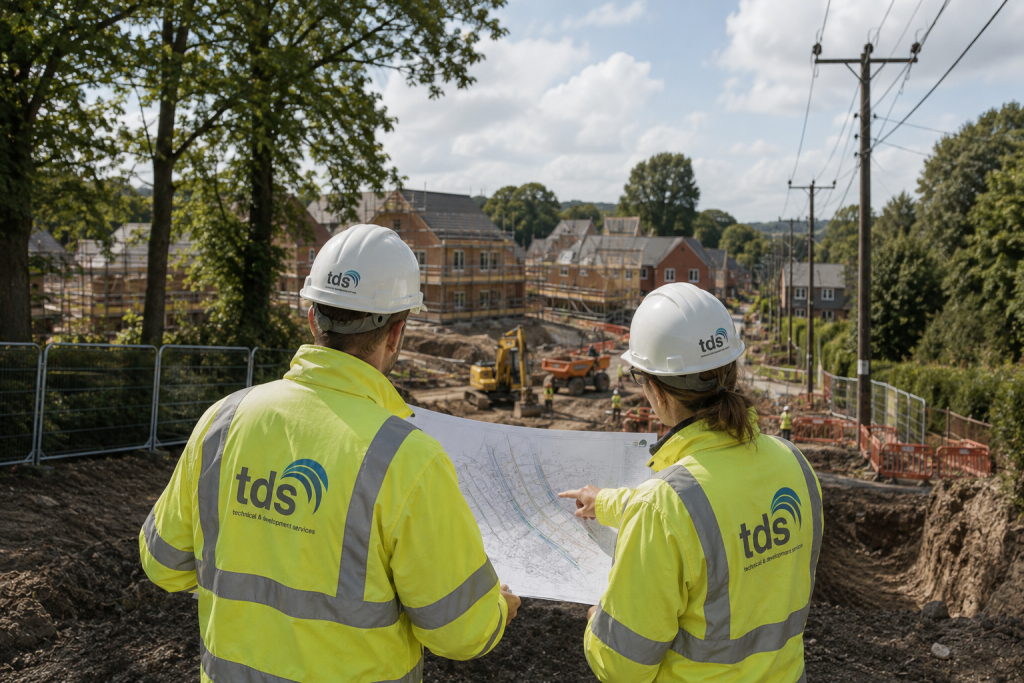
Coordinating Major Utility Diversions Within a Constrained Site
TDS was appointed to manage utility coordination and procurement for a residential development affected by two significant existing assets: an 11 kV electricity network requiring diversion and a Thames Water strategic Trunk Water Main.
The electricity diversion presented particular challenges. Proposed site levels differed from existing ground levels by up to 2–3 metres, while overhead lines needed to be removed before highway works and new homes could progress. The diversion route also had to respond to existing trees and land and legal constraints, creating interconnected design, programme and approval risks.
Developing Coordinated Diversion Strategies
Over an eight-to-ten-month period, TDS worked closely with the client, electricity network operator and water authority to develop coordinated diversion strategies and progress the necessary designs and quotations. Regular coordination ensured that utility requirements were considered alongside the wider development proposals and emerging site constraints.
Creating a Clearer Route to Utility Delivery
TDS established coordinated strategies for both utility diversions, bringing together the engineering, arboricultural and legal considerations affecting the site. This enabled the electricity and water proposals to progress on a basis compatible with the wider development and gave the client a clearer route through design approval, quotation and delivery planning.
By identifying and addressing the principal constraints early, TDS reduced the risk of late redesign, programme disruption and unforeseen utility works affecting the highway and residential construction.
Coordinated utility diversion strategies established, giving the client greater clarity through design approval, quotation and delivery planning.
Electricity and strategic water-main diversion requirements were brought together with the wider development proposals and site constraints.
Potential conflicts involving site levels, highway works, existing trees and land and legal constraints were considered before formal diversion proposals progressed.
The coordinated strategy gave the client greater clarity around design approval, quotations, programme requirements and future delivery planning.